
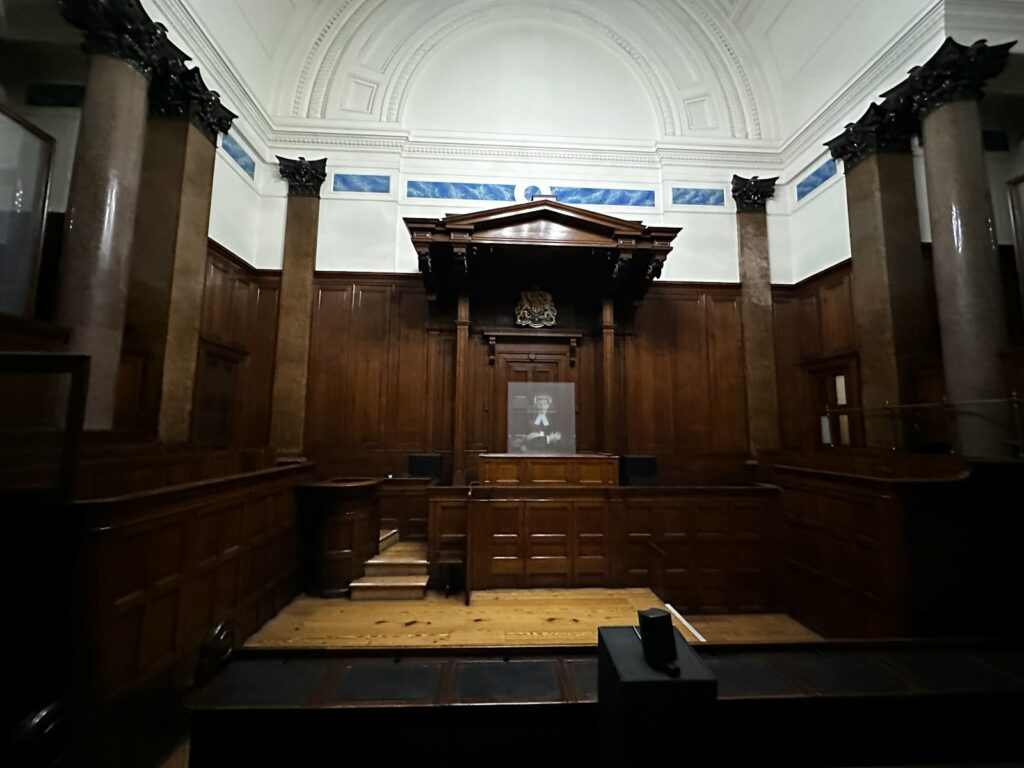
When a legal matter turns on questions that sit outside ordinary knowledge, the court needs help to understand them. A person’s psychiatric condition, what caused it, and how it affects their capacity to work or function are classic examples. That help comes from an expert witness, and the quality of their evidence can shape how a case is argued, settled or decided.
For legal teams, knowing what an expert witness can and cannot do is just as important as knowing who to brief. This guide explains the role, the rules that govern expert evidence in Australia, and what lawyers rely on when they instruct an expert in a psychiatric or medico-legal matter.
What Is an Expert Witness?
An expert witness is a person with specialised knowledge, based on their training, study or experience, who gives opinion evidence to help a court or tribunal understand issues beyond the knowledge of a lay person.
This definition reflects section 79 of the Evidence Act 1995 (Cth), which creates an exception to the general rule that witnesses cannot give opinion evidence. A witness may give an opinion if it is wholly or substantially based on specialised knowledge they hold. Each state and territory that has adopted the uniform evidence law has an equivalent provision.
In short, a lay witness tells the court what they saw or heard. An expert witness tells the court what the facts mean, within their field of expertise.
Who Is Who in Expert Evidence
Many people in a matter may hold relevant knowledge, but not all of them are giving expert evidence. Legal teams need to be clear on who plays which role, because each carries different duties and weight.
| Role | Who they are | What they provide |
| Expert witness | A qualified professional retained to give an independent opinion, e.g. a consultant psychiatrist | Opinion evidence based on specialised knowledge, usually in a written report and, if required, oral testimony |
| Lay (fact) witness | A person with first-hand knowledge of events, such as a family member, colleague or the claimant | Evidence of what they saw, heard or experienced, not opinions on technical matters |
| Treating practitioner | The GP, psychiatrist or psychologist who has treated the person | Clinical records and treating history. They may give evidence, but their role is treatment, not independent assessment |
| Independent medico-legal expert | A specialist with no treating relationship who assesses the person for the legal matter | An objective assessment of diagnosis, causation, impairment and prognosis |
| Court-appointed or single expert | An expert appointed by the court, or agreed by the parties, to report on an issue | One opinion on a defined question, reducing duplication and cost |
| Instructing solicitor | The lawyer who retains and briefs the expert | The letter of instruction, the questions to be answered and all relevant information |
| The court or tribunal | The decision-maker | Weighs the expert evidence alongside all other evidence and reaches its own conclusion |
The distinction between treating and independent experts matters most in psychiatric cases. A treating psychiatrist has a therapeutic relationship with the person, which can make an independent forensic opinion harder to give. That is why legal teams often brief an independent medico-legal psychiatrist to assess the issues in dispute.
Examples of Cases That Rely on Expert Evidence
Expert evidence is used across many areas of law. In psychiatric and medico-legal work, the most common matters include:
- Personal injury and motor accident claims. A claimant develops post-traumatic stress disorder or depression after an accident. The expert assesses the diagnosis, whether the accident caused it, and the likely prognosis.
- Workers compensation. A worker claims a psychological injury from workplace bullying or a traumatic incident. The expert may assess causation, capacity for work and permanent impairment under the relevant scheme guidelines.
- Historical and institutional abuse claims. A survivor brings a civil claim decades after the events. The expert assesses the psychiatric harm, its connection to the abuse and its effect on the person’s life and earning capacity.
- Medical negligence and nervous shock. Damages for pure mental harm generally require a recognised psychiatric illness, so a psychiatric opinion is often central to the claim.
- Criminal proceedings. Questions about fitness to stand trial, mental impairment or mental health factors relevant to sentencing.
- Family law matters. Where a parent’s mental health is relevant to parenting arrangements or risk.
- Insurance and employment disputes. Total and permanent disability (TPD) and income protection claims, and fitness for duty assessments.
A practical example. A plaintiff firm acts for a client who was abused in an institution as a child and now experiences anxiety and difficulty holding employment. The firm briefs an independent psychiatrist with questions on diagnosis, causation, treatment needs and capacity for work. The resulting report gives the court and the defendant an objective basis to assess damages, and often becomes the foundation for settlement discussions.
The Expert Witness Role: Core Responsibilities
The expert’s paramount duty is to the court, not to the party paying for the report. The Federal Court’s Expert Evidence Practice Note (GPN-EXPT) makes this clear: an expert is not an advocate for a party and must assist the court impartially on matters within their area of expertise.
In practice, an expert witness is responsible for:
- Staying within their field. Opinions must be based on specialised knowledge. If a question falls outside the expert’s expertise, they must say so.
- Remaining independent. The practice note warns parties never to treat an expert as a “hired gun” or pressure them to conform their views to a party’s interests.
- Stating the basis for every opinion. An opinion may have little or no value unless the assumptions, facts and reasoning behind it are expressly stated.
- Considering all relevant information. Legal teams should give the expert all relevant material, whether it helps or harms their client’s case.
- Being willing to change their view. Experts should make concessions or revise an opinion when the evidence requires it, and must provide a supplementary report if their opinion changes on a material matter.
- Giving evidence if required. This can include oral testimony, a conference with other experts, and cross-examination at trial.
It is not a failure for experts to disagree. As the practice note states, the court will reach its own conclusion with the help of the expert evidence.
The Expert Witness Code of Conduct and What an Expert Report Must Include
Australian courts apply a harmonised code of conduct for expert witnesses. It was adopted by the Council of Chief Justices of Australia and New Zealand in 2015 and has been implemented across jurisdictions, including:
- Federal Court: Annexure A of the Expert Evidence Practice Note (GPN-EXPT).
- New South Wales: Schedule 7 of the Uniform Civil Procedure Rules 2005 (NSW). Under rule 31.23, an expert witness must comply with the code. Unless the court orders otherwise, their report or oral evidence cannot be received unless they acknowledge they have read the code and agree to be bound by it.
- Other jurisdictions: Many other state and territory courts apply equivalent rules or practice directions. Tribunals and statutory schemes may have their own requirements, so legal teams should always check the rules for the forum.
Under the harmonised code, every expert report must clearly state the expert’s opinions and include:
| Requirement | Why it matters to legal teams |
| Name, address and qualifications | Establishes the expert’s specialised knowledge |
| Acknowledgement that the expert has read the code and agrees to be bound by it | A missing acknowledgement can put admissibility at risk |
| Assumptions and material facts behind each opinion | Allows the court to test the opinion against the facts proved |
| Reasons, literature and materials relied on | Shows the reasoning, not just the conclusion |
| Any question outside the expert’s field | Prevents opinions beyond their expertise |
| Examinations, tests or investigations relied on, and who carried them out | Records the clinical basis, e.g. psychometric testing |
| Any reliance on another person’s opinion | Makes the chain of reasoning transparent |
| A declaration that all appropriate inquiries were made and nothing significant withheld | Confirms the report is complete |
| Any qualifications, or opinions that are not concluded | Flags limits caused by insufficient data or research |
| A brief summary at the start of a long or complex report | Helps the court and counsel navigate the evidence |
In the Federal Court, the expert must also identify the questions they were asked, confirm their opinions are based on specialised knowledge, and attach their instructions and the documents they were asked to consider.
How Expert Evidence Is Tested: Conferences, Joint Reports and Cross-Examination
A written report is rarely the end of an expert’s involvement. Courts use several processes to narrow the issues between experts and test their opinions.
Conference of experts. The court may direct experts from the same discipline to meet and identify where they agree, partly agree or disagree. According to the Federal Court’s guide to expert evidence, the lawyers do not usually attend. They receive a copy of the outcome instead. Parties must not encourage their expert to avoid agreement.
Joint report. After the conference, the experts usually prepare a joint report. It sets out the issues they agree on, those they do not, and a short explanation of any differences.
Concurrent evidence. Often called the “hot tub”, this involves experts giving evidence together, issue by issue. The judge guides the process, and counsel can still question each expert. The Federal Court notes it can reduce the adversarial nature of expert evidence and help experts focus on the real points of disagreement.
Cross-examination. At trial, the opposing party can test the expert’s qualifications, assumptions, method and reasoning. A well-prepared expert answers within their expertise, makes appropriate concessions and explains complex psychiatric concepts in clear terms.
Qualifications, Training and Choosing the Right Expert
The right expert is one whose specialised knowledge matches the specific questions in the matter. In psychiatric matters, legal teams typically look for:
- Specialist qualifications. A consultant psychiatrist typically holds a Fellowship of the Royal Australian and New Zealand College of Psychiatrists (FRANZCP) and is registered with the Australian Health Practitioner Regulation Agency (Ahpra).
- Relevant training. Some matters call for further training, such as the RANZCP Certificate of Advanced Training in Forensic Psychiatry, or accreditation to assess permanent impairment under a particular compensation scheme.
- Clinical experience in the specific issue. Childhood trauma, workplace psychological injury and criminal responsibility each call for different clinical experience.
- Medico-legal experience. Familiarity with the code of conduct, report writing for courts, and giving testimony under cross-examination.
- Independence. No treating relationship with the person and no conflict of interest.
Questions to ask before briefing an expert
- Does the expert hold the qualifications and accreditation the forum requires?
- How much experience do they have with this type of matter?
- Can they assess in person, by telehealth or by audio-visual link, as the case requires?
- What is the expected timeframe and cost for the report?
- Are they available to attend a conference of experts or give evidence at trial?
What Legal Teams Should Do When Instructing an Expert
The quality of an expert report depends heavily on the quality of the brief. The Federal Court practice note sets clear expectations for parties and their lawyers:
- Provide the code early. Give the expert a copy of the practice note and code of conduct at the earliest opportunity.
- Disclose all relevant information. Include material that helps and harms the client’s case, so the expert can prepare a truly independent report.
- Frame neutral questions. Questions and assumptions should be unbiased and should not confine the expert to selective or irrelevant issues.
- Avoid inappropriate influence. Never pressure an expert to change their opinion or to avoid agreement with another expert.
- Agree the issues where possible. Before experts are retained, parties may try to agree the questions and the relevant facts and assumptions.
- Serve extrinsic material. Photographs, test results, calculations and other materials an expert refers to should be provided to the other parties with the report.
How MindSense Can Help
MindSense Centre of Psychiatry provides trauma-informed medico-legal psychiatric assessments and expert witness services for legal matters across Australia.
Whether you need an independent psychiatric assessment, a court-ready report or an expert witness for trial, our consultant psychiatrists can help. To brief a MindSense psychiatrist, contact the MindSense team today.
Booking Notice: Please note that MindSense does not accept self-represented matters.